

Two Minute Warning
- Deacon Dan DeLuca
- Oct 29, 2022
- 5 min read
If you are familiar with football, then you know what the two minute warning is. It is the point in time, at the end of each half, where the clock is stopped with two minutes left to go. It gives each team a moment to pause and figure out what they need to do to win the game. This Gospel, should serve as our two minute warning. Jesus is clearly telling us what will happen to us as a result of our failure to turn to him and repent. Let us pray for the grace for our eyes to be opened to what is at stake and what we need to do to win the game as we read this Gospel.
The Lament over Jerusalem
At that very hour some Pharisees came, and said to him, “Get away from here, for Herod wants to kill you.” And he said to them, “Go and tell that fox, ‘Behold, I cast out demons and perform cures today and tomorrow, and the third day I finish my course. Nevertheless I must go on my way today and tomorrow and the day following; for it cannot be that a prophet should perish away from Jerusalem.’ O Jerusalem, Jerusalem, killing the prophets and stoning those who are sent to you! How often would I have gathered your children together as a hen gathers her brood under her wings, and you would not! Behold, your house is forsaken. And I tell you, you will not see me until you say, ‘Blessed is he who comes in the name of the Lord!’” Luke 13 : 31-35
Scriptural Analysis
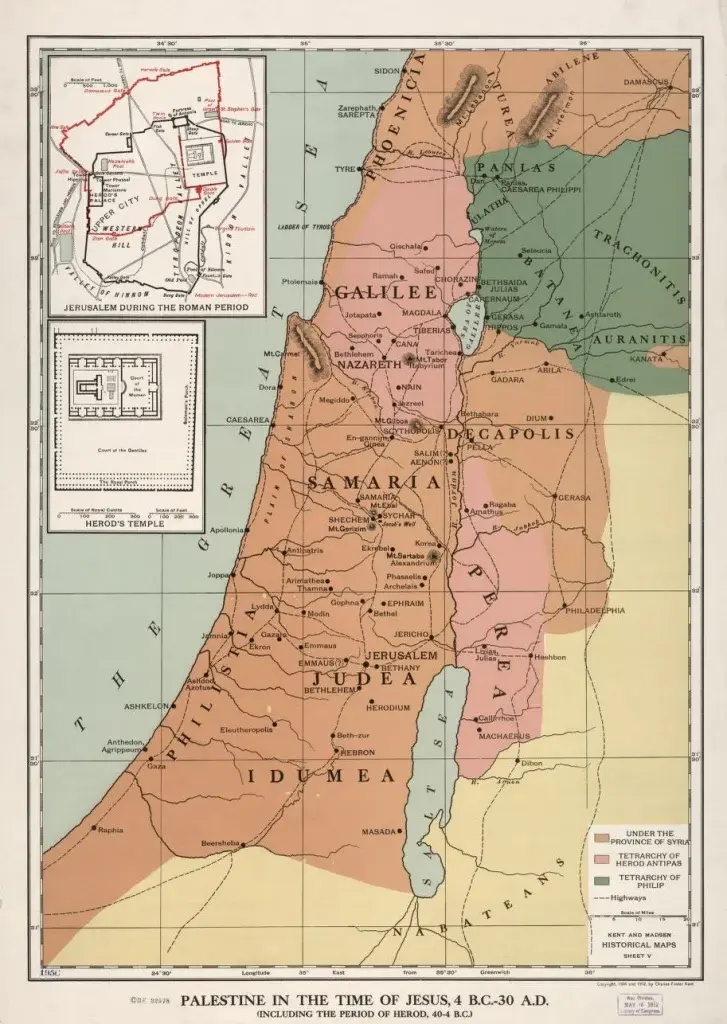
This passage has an interesting start. The Pharisees, who are usually Jesus’s adversaries, appear to help him: warning him that Herod wants to kill him. Since Jesus sent them back to Herod, that means they definitely were at least in touch with Herod if not in collusion with him. Herod governed Galilee as well as Perea which is east of the Jordan. Jesus is advised to leave. Herod’s wish to kill Jesus, as he did with John the Baptist, was implied in his earlier attempt to meet Jesus. Recall that Jesus responded to that request by going to Bethsaida which is outside the jurisdiction of Herod.
Ultimately, it is God’s plan that keeps Jesus moving to Jerusalem, the city where a prophet such as he should die. The transition word, nevertheless, could also be translated it is necessary It was necessary for Jesus to complete this journey. For today and tomorrow he can continue to teach but on the third day, which refers to his resurrection, he will accomplish his mission.
Note that Jesus calls Herod a fox. That can have multiple meanings. A fox is craft but also insignificant, “Yes, what they are building—if a fox goes up on it he will break down their stone wall!” (Nehemiah 4:3) However, the Hebrew word for fox sounds really similar to the name Saul. Saul wanted to kill David but David was warned, “And Jonathan told David, “Saul my father seeks to kill you; therefore take heed to yourself in the morning, stay in a secret place and hide yourself.” (1 Samuel 19:2) Herod wants to kill Jesus but Jesus, the son of David, is warned.
Jesus now addresses Jerusalem twice in a lament. His lament recalls the earlier words where Jesus recalls how Jerusalem kills the prophets and stones those sent to him, “Therefore also the Wisdom of God said, ‘I will send them prophets and apostles, some of whom they will kill and persecute.’” (Luke 11:49). Jesus has the mission to gather the children of Jerusalem and restore Israel similar to how God gathered the wilderness generation, “Like an eagle that stirs up its nest, that flutters over its young, spreading out its wings, catching them, bearing them on its pinions.” (Deuteronomy 32:11) Jesus longed to do this but the people rejected him.
Just as Jeremiah warned the people Jesus also warns the people about the consequences of their continuing to shed innocent blood: not just his own but his disciples as well. He uses a new image, the forsaking or abandoning of their house. This foretells of the deescution of the temple. Nevertheless, it is important to remember that God does not reject the people of Israel. The gifts of God and their call are irrevocable. God uses their resistance to bring the message to the gentiles.
Daily Application
Jesus is continuing on this theme of repentance and urgency in this Gospel. He does this by way of laying out a vision of what is going to happen as a result of the rejection of his offer of mercy: the destruction of the temple. It can be hard for us to grasp just how important the temple was to the life of a first century Jew. The temple was the center of your faith: where God dwelt amongst the people. It is hard to imagine a worse consequence for the rejection of Jesus than the destruction of the temple.
Do we act is if there are consequences for our decisions in the spiritual life? I know if I crash my car into a brick wall at high speed, there is going to be a rather serious consequence, an immediate consequence, so I don’t run my car into brick walls. Failure to act in the spiritual life does have consequences as well. That is what Jesus has warned us about over and over in this Gospel as well as many of the preceding Gospels. If you don’t turn to him and repent, there will be consequences.
The problem is that those consequences are delayed. Today, if I sin, depending upon the nature of the sin, there likely is not an immediate consequence. For example, if I miss Mass on Sunday and I do not have a serious reason, I have committed a mortal sin. Practically speaking, however, not much has changed in my experience of life, at least not immediately. I am not going to be put in jail, the hospital, nor will I have the plans for the rest of my day ruined. At best, this lack of an immediate consequence creates the illusion that there is more time for me to get my spiritual life in order. At worst, it provides me with the false notion that there are no consequences for committing mortal sin
The other challenge in accepting that there are consequences in the spiritual life, is that the Gospel has been watered down. We have bought into this notion that all of this stuff, sin and repentance, doesn’t really matter. I can get to heaven by being a good person. What being a good person means, is open to a lot of interpretation: of selective cherry picking of scripture and ignoring tradition. Now, I will say right off the bat, only God knows ultimately what will happen: who will get to heaven and who will not. Only God knows what limits there are to his mercy. However, the message of the Gospel is direct. We need to repent and walk the narrow path. Doing anything other than that is gambling with your eternal destination.
Listen to the words of Jesus. Let them serve as your two minute warning. Stop, and assess where you are spiritually. Use the sacraments, reconciliation and the Eucharist, along with the wisdom of the church as your guide. Figure out what you need to do to win the game: to enter through the narrow door. Then pray for the wisdom and strength to do that which is needed.


Comments